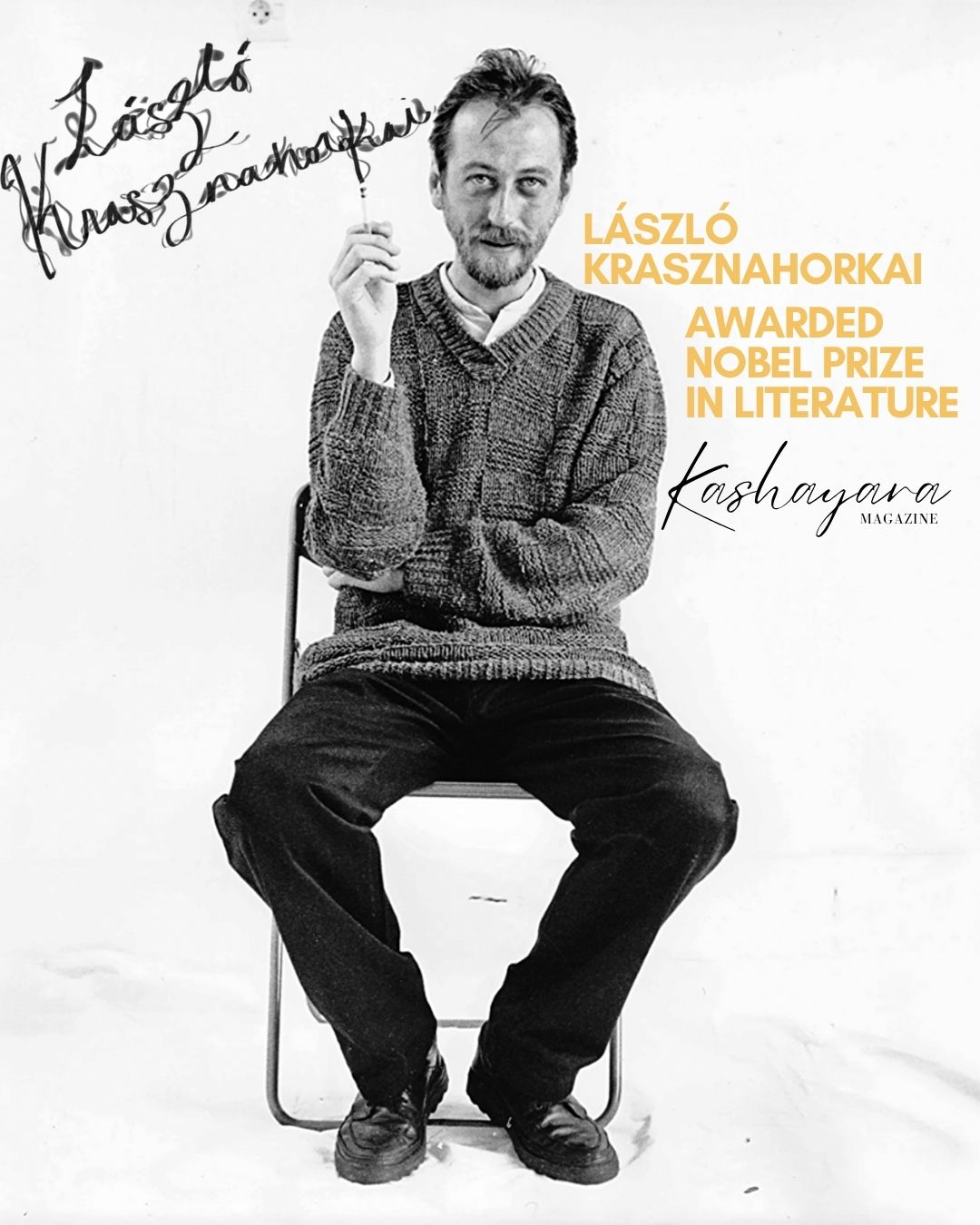
Krasznahorkai is known for dense, philosophical novels — sometimes very long sentences, surreal or bleak settings, themes of decay, existential dread, absurdism. He’s considered part of a Central-European tradition that includes writers like Franz Kafka and Thomas Bernhard
Taken together, those quotes show someone who starts modestly (“just one book”) but then is driven by self-critique, by the desire to improve, to “correct” earlier works. And he is deeply engaged with the world’s bleak aspects — socially, politically, existentially. One more useful detail: his first novel, Satantango (1985) is repeatedly cited as foundational. And several of his works have been adapted into films by Béla Tarr.
The prize underscores how literature that is tricky, demanding, bleak — not always comforting — can still be seen as essential. The Swedish Academy’s wording about “art in the midst of apocalyptic terror” highlights that his work speaks to difficult times.
There is also a symbolic significance: he is the first Hungarian laureate in Literature since Imre Kertész (2002) in that category.
“To be in the line, which contains so many really great writers and poets, gives me power to use my language, my original language, the Hungarian language,” he said.
This underlines how awards like this also reflect language, national culture, translation, and global readership.
In short: his win is not only about one author, but about how serious, complex literature persists — and is recognized — even when it doesn’t pander to easy tastes or trends.





Leave a Reply