

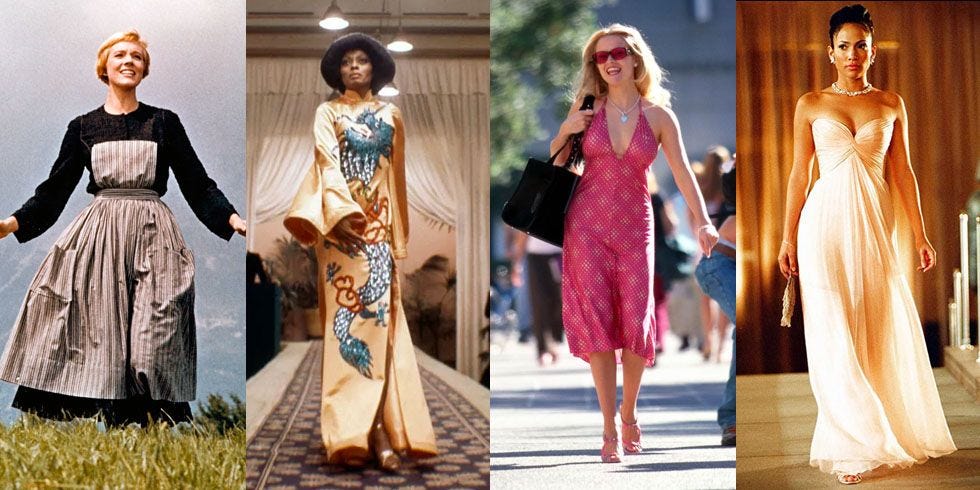
Thinking Through Fashion
Fashion is too often treated as spectacle, surface, or fleeting trend. But in its richest incarnations, it is thinking — a language, a material philosophy, a lens to read society, identity, memory, and technology. In 2025, that thinking is accelerating: couture rigor invades ready-to-wear, digital-technological processes assert themselves as aesthetic as well as functional, and the boundary between costume, art, and narrative dress dissolves further.
To think fashion through now is to trace how three vectors converge: the runway (as manifest text), the cinematic/televisual (as costume and narrative projection), and the technological (as algorithm, as material, as new craft). The following moments from Paris and beyond, and the work of designers like Birgit Müller and a new 3D‑printing artist arriving in LA, help sketch a map of where fashion as thought is going.
Couture in Ready-to-Wear: Schiaparelli’s Intellectual Ambition
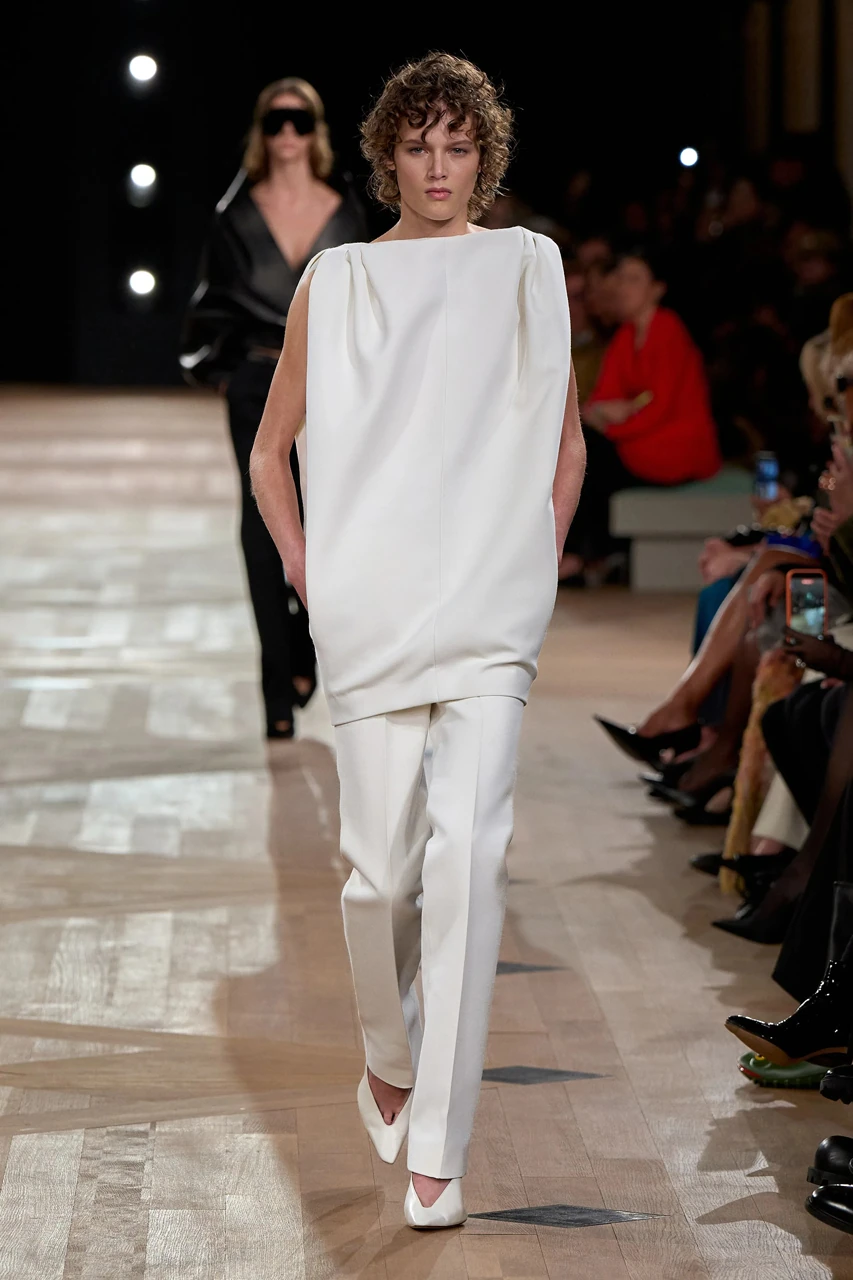
At the Pompidou Centre during Paris S/S 2026, Daniel Roseberry presented a Schiaparelli collection that challenged conventional categories. The show notes themselves posed a question: “Why can’t fashion — even everyday fashion — be art?” What feels like a rupture is also a continuation of a lineage in which fashion is read, studied, interpreted, performed.
Roseberry looked to Elsa Schiaparelli’s love of “unexpected frictions” — combining sharply tailored shoulders with fluid chiffons, chainmail with negative space, and feather polka dots with deep crimson satin columns.
The collection’s paradoxes (hard vs. soft, structure vs. fragmentation, reveal vs. conceal) mirror the dialectic at the heart of fashion thinking: the garment as object and narrative, the silhouette as signifier.
In one memorable moment, a jacket’s cut seemed architectural; a gown’s torn chainmail revealed glimpses of the body. The show was less about trends and more about tension: between restraint and excess, between the body and its ornament. It made us ask: when a piece of clothing is worn, is the wearer reading the dress, or the dress reading the wearer?
That kind of tension is exactly what gives runway shows staying power — they invite interpretation and discourse beyond the single season.
Balenciaga, Pierpaolo Piccioli, and the Quiet Revolution of Emotion
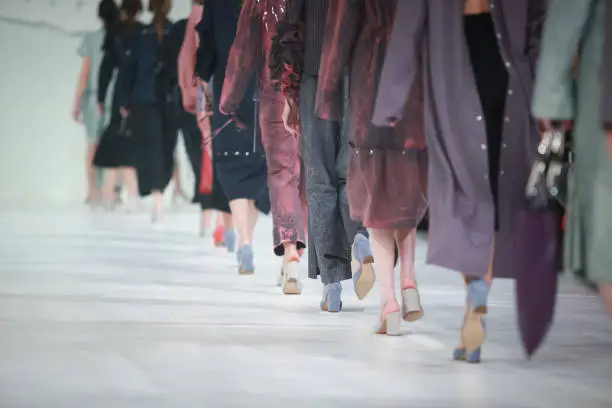
Meanwhile, at Balenciaga’s S/S 2026 runway under Pierpaolo Piccioli, there is neither bombast nor literal futurism, but an insistence on emotional resonance. According to coverage, the collection was described as romantic, sensual, and modern, bringing lyricism to a house once known for architectural severity.
Piccioli’s version of Balenciaga does not compete by spectacle. Rather, it grounds itself in the body, in gesture, in quiet contrast. The shapes, fabrics, and movement are calibrated to emotion — to longing, pause, intimacy. In that sense, the show is a meditation, not a manifesto, and again pushes fashion toward the realm of thinking.
Where Roseberry plays friction, Piccioli performs tenderness. The two together — one flash, one whisper — suggest that in 2025 the creative task is not to outdo but to complicate, to provide spaces for reflection inside the commercial runway machine.
Birgit Müller: At the Intersection of Narrative, Costume, Couture
If the runway imagines fashion thinking in the realm of spectacle, the world of costume pushes it into story, character, and memory. This is where designers like Birgit C. Müller come into view.
Born in Vienna and raised in Marbella, Müller’s education is telling: she studied journalism, publicity, and promotion at the London College of Printing; then direction and production at the BBC Television Training Academy; and later fashion design at West London College.
Those layers of editorial, audiovisual narrative, and fashion embed in her work a sensibility for how stories are worn, how a costume anchors character in space and time.
Fashion is not about trends, it’s about storytelling. Each garment is a script, each stitch a line of dialogue. Costume becomes the bridge between identity and imagination.
Müller is a three-time Emmy Award winner for her costume design work on The Bold and the Beautiful.
Her trajectory is precisely the path we should consider: she navigates film/TV, couture, and fashion sensibility all at once. On her website and in interviews, she emphasizes that each gown she designs is bespoke to the wearer, a dialogue rather than a mass broadcast.
Her designing is not about brand signature so much as personal signature, and the ability to slip between red-carpet glamour, cinematic identity, and editorial silhouette.
What Müller reminds us is that fashion thinking is never separable from narrative — that what one wears is always a text, and that costume design is fashion’s deepest form of dramaturgy.
The 3D-Printing Artist: Crafting Fiction in Film & TV
Beyond the runway and traditional costume, a new vanguard is emerging: artists who bridge 3D‑printing, film, and wearable sculpture. One such fashion artist is scheduled to come to Los Angeles on October 14, poised to present work at the intersection of cinematic costume and additive fabrication.
While specific published details about this artist are scarce (beyond what you’ve shared), the broader field already offers precedents and aesthetics worth situating her in. Designers like Iris van Herpen have long integrated 3D printing and algorithmic processes, creating garments like Hybrid Holism or Cathedral, mixing soft and hard materials in surprising morphologies. In those works, printed elements act as skeletal networks, second skins, or animated sculptures. Van Herpen’s collaborations (e.g. with Materialise or Stratasys) have made garments that are as much architectural statement as dress.
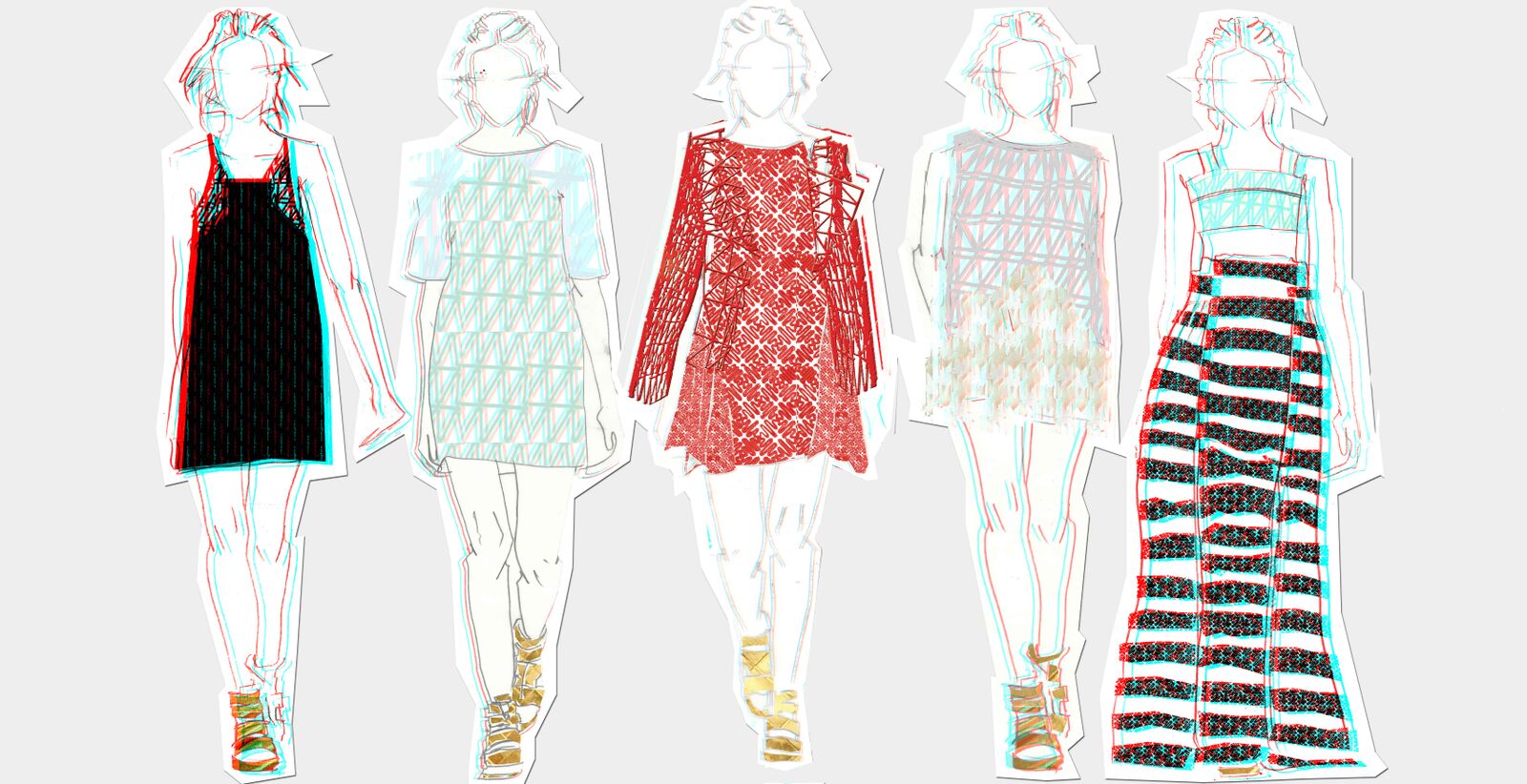
Another relevant name is Danit Peleg, an Israeli designer who built her early reputation through fully 3D‑printed garments (for instance, her Liberte jacket). Peleg’s approach was not just technical novelty — she upheld that the printed garment can still feel personal and emotional, a tension between machine logic and human gesture.
So the artist arriving in LA is entering into a lineage already thinking through how code, material, and narrative converge. Her garments won’t simply be props — they may carry symbolism, mechanical motion, or hybrid worlds between fantasy and human form. In a film or TV context, such garments can become characters themselves, literalizing interior states or speculative futures.
Imagine a moment in a sci-fi series: a character’s dress subtly shifts pattern according to emotional beats, or a printed filigree unfurls like digital lace in-camera. That is the realm where fashion is thinking — where it is no longer decoration, but actor.
Toward a Poetics of Dress: What Thinking Through Fashion Asks of Us
In bringing together Schiaparelli’s couture shocks, Piccioli’s emotional minimalism, Müller’s narrative hybridity, and the 3D‑printing artist’s cinematic scaffolding, a few themes emerge:
Fashion as language, not ornament. The richest garments are those that speak: to memory, body, identity, or story. When fashion “thinks,” it asks questions rather than imposes answers.
The collapse of silos. The boundaries between runway, costume, and technological experiment are dissolving. A couture technique now filters into ready-to-wear; a 3D-printed element becomes part of a red-carpet gown; a film costume seeps into editorial fashion.
Material intelligence. Fabric is no longer inert. It responds, transforms, resists. In 3D printing, the code and the form are coauthors. The materiality of fashion is now computational, responsive, and even biomechanical.
Narrative agency. Clothes no longer merely clothe characters—they act. Even in non-narrative fashion shows, garments suggest agency: the swagger, the stiffness, the fluidity. What a dress does (to the body, to space, to light) is part of its meaning.
Permanence in flux. Even as fashion is ephemeral, the thinking behind it can persist. A provocative cut, a new fabrication technique, a costume motif — these ripple outward and generate new questions, new forms.
To design an issue or series around this, you might consider pairing runway dissections (like Schiaparelli or Balenciaga) with interviews of technologists or costume designers. A profile of the LA 3D artist could dovetail with a speculative short: “What if clothing could think?” You could run sidebars on process (CAD, printing, motion capture), archival references (couture innovations of the past), and glossaries (e.g. SLS printing, Gram-programmatic knitting, textile kinetics).
Thinking Through Fashion is less a title than a method. It invites the reader to slow down, to read garments as texts, to see dress not only as beauty, but as dialectic, as code, as agent. If fashion is a conversation between body and world, then in 2025 that conversation demands new materials, new narrators, new grammars. And it’s exactly in that creative tension — between artifice and reality, between spectacle and subtlety — that fashion begins to think.
Are you a columnist or reporter? Kashayara Magazine is looking for enthusiastic writers in art, entertainment, fashion, lifestyle, wellbeing, and travel.


Victoria Gwin
Very interesting article!!! Would love to read more about all this! Can you tell us more about the 3D?